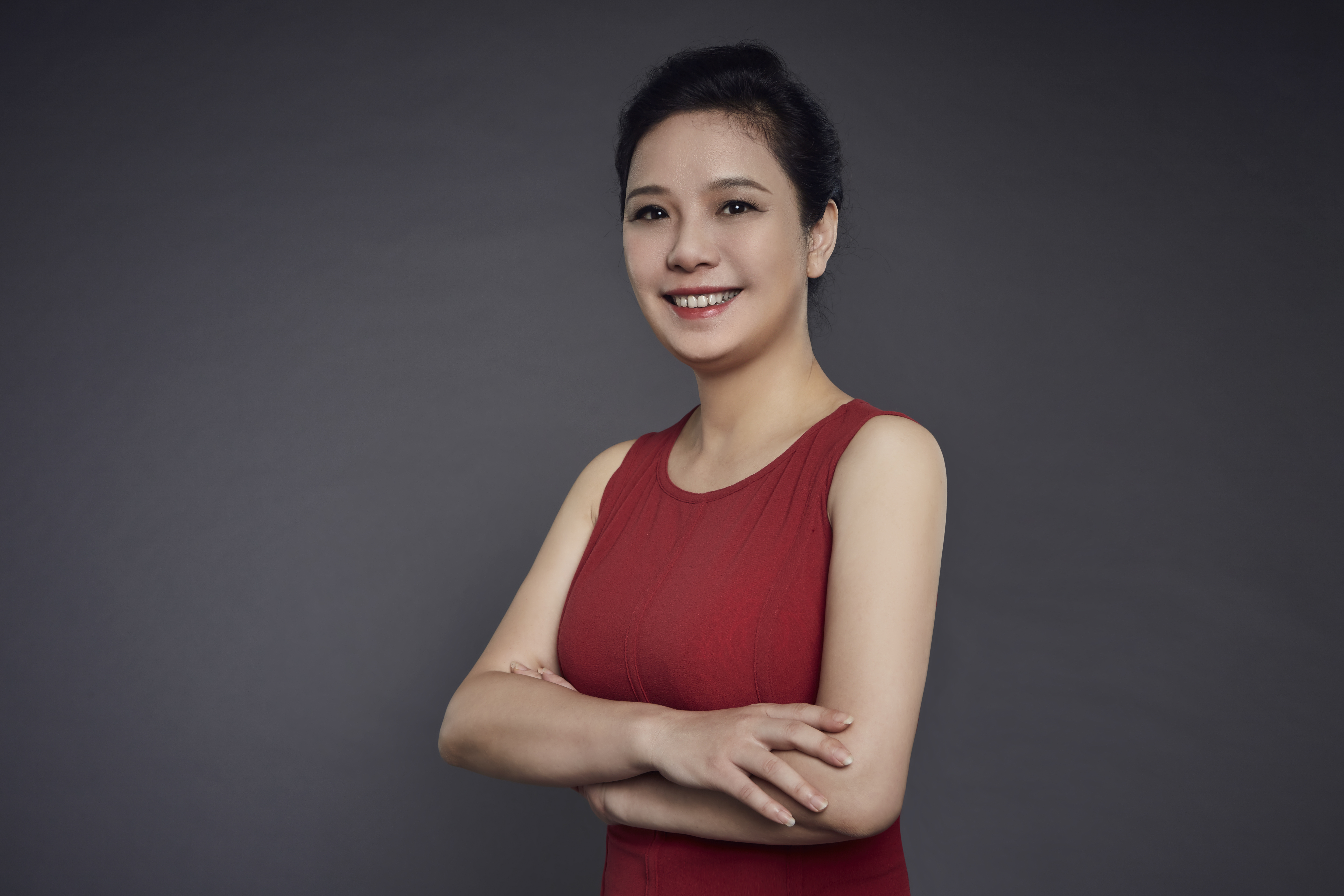
Once seven degrees of entrepreneurship, lost the light savings of jinxia, firmly believe that they are destined to become an entrepreneur, finally create a world in the advertising and marketing industry. The ability to explore the unknown, she says, is her biggest attraction.
@comm founder: jin xia
In the commercial activities, jinxia is always a gorgeous dress, bright smile. As the founder and head of @comm for nearly 20 years, she is like an "older generation" entrepreneur, still operating with a beginner's momentum. Jin xia was born in ningbo of an ordinary family. After graduating from fudan university with a degree in journalism, she has been working for foreign companies such as McCann bright and Nike. She started her own business in the early 1990s, before "entrepreneurship" entered the public consciousness. She failed many times and even lost all her savings, but she firmly believed that she was destined to be an entrepreneur. She used her experience in foreign companies to analyze her own strengths and set up @public relations in 1999. For more than a decade, @comm has been the leader of local communications companies. Its long-term customers include internationally renowned enterprises such as Disney, McDonald's, budweiser and maestro. In 2017 and 2018, it was named "the best social media agent of the year in greater China" by Campaign China. Over the years, the technological progress and transformation of communication media constantly affect and reshape the communication industry. Jinxia always stands at the forefront of the industry with its incomparable spirit of exploration. She transformed @comm from a public relations company focused on corporate brand communications to an integrated marketing company. Faced with a fickle business environment and many "hidden rules" in the industry,
Q: can you describe your family background? What value does your family bring to you?
A: my mother is a teacher. My father is a financial officer. My mother wanted me, but not personality. When I was young, I was not a typical good student. I want to do what I like. For example, when I was a child, I liked to dance. She would come up with many ways to help me meet my non-learning interests. When I was in primary school, discipline was poor. My teacher complained to my mother, but instead of punishing me all day, my parents tried to make me skip the grade. I went straight to fourth grade. In the first three months, it became very serious due to lack of understanding, and after three months, it was very mild. My mother told me to skip fifth grade and go straight to high school. Nothing in my life is impossible to try.
Q: you graduated from a famous university and have a stable job in a foreign company. What inspired you to start your own business?
A: I started my career before I went to Nike. I'm young and not very successful. I've started seven or eight startups in my life. I think I have the entrepreneurial DNA to sleep on the floor and become CEO. Foreign companies certainly gave me a good environment and training, but I think some people naturally want to start a business.
Q: why don't you lose heart after failure?
A: you don't start a business because you're going to succeed. This may be because you feel an impulse to have opportunities, values and things of value. You can find new business models, find new products, find new teams, and build together. Very interesting. I was prepared for it to fail, because 99% of startups fail. So failure is not a blow to me.
Q: you've been working in communications for a foreign company. Where does your passion for communication come from?
A: it has a lot to do with my personality. Communication is something that changes every day, so it has freshness. We will meet different customers and different industries, which greatly satisfies my curiosity and diversity. What's more, I am a person who likes to express my own ideas and influence others. Communication can achieve these goals.
Q: what kind of company did you initially want to start with?
A: I want to be the most knowledgeable international communications company in China. I think the problem of communication is closely related to the local culture. One of the biggest problems for foreigners is that they don't have a keen cultural insight into Chinese consumers, because foreigners rely on market research reports to think about strategy, and there's a lot they can't tell you. We are a local company, is Chinese, so so many years of China's development and change, each generation of insight mentality, will be relatively sharp.
Q: what is your most impressive communication over the years?
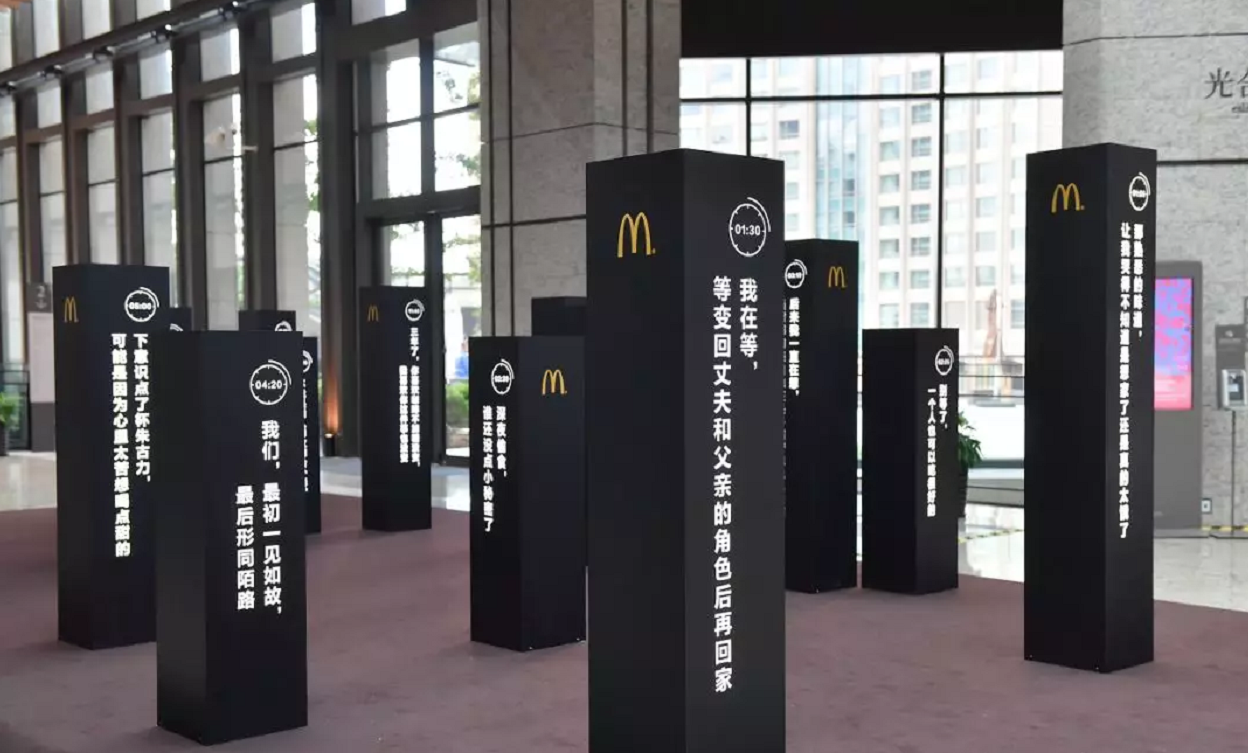
A: we did it for McDonald's. It's called "this table has a story." Abroad, McDonald's has been in business for many years and is now a fast food restaurant. However, McDonald's is still a ritual for many Chinese. Many people have their first love, their first interview, and their children's first birthday celebration. Many stories take place at McDonald's. We use a lot of social media to get consumers to tell their McDonald's stories. We collected more than 20,000 such stories, selected some of the most interesting ones and printed them out for a large exhibition. This insight, just because you're a local, you see the difference.
@comm Managed the "this table has a story" marketing campaign for McDonald's
Q: in recent years, the public relations industry has also exposed some whitewashing, smearing others and manipulating the public. What do you think?
A: this is a unique phenomenon in the Chinese market. So-called "black pr" or whitewashing is not what professionals should do. I do the pr of the company, if its products are good, its enterprise is good, its culture is good, it's not bad, I whitewash it. True public relations, values must be correct, not through gimmicks, but through deep insight into social issues and human nature. Attacking competitors to gain eyeballs is not sustainable. Ten years ago, a company offered me $2 million to discredit its competitors. At the time, $2 million was a lot of money, but we said no. No matter how much money is spent, this is not what we should do.
Q: how did you develop this business ethic? Is it because of your previous professional experience?
A: I am deeply moved and educated by the business ethics of foreign companies. What I appreciate most is that they use systems to ensure value, not slogans. When I went to Nike, Nike had just entered China. At that time, something happened. The company fired its entire sales team in one day. Just because my colleague asked for more money, he also asked me to rent out tickets. The amounts involved are very small, just a few hundred dollars per person. The price of firing the sales department in one day was that our business was shut down for nearly two or three months. But the decision is about value, not profit. These experiences have helped me develop a high standard of business ethics in my business.
Q: how do you handle more abrasive customers?
A: my view of the customer is very simple. If a client is a perfectionist and wants to get things done, I respect him. I think it doesn't matter, we can work out the best thing. However, if the client, as party a, is rich and disrespectful in behavior and words to party b, then my choice is simple: no cooperation.
Q: what do you think are your greatest strengths and weaknesses? How do these characteristics affect the way you manage your business?
A: I think my greatest strengths as an entrepreneur are probably my curiosity, fearlessness about failure and willingness to take risks. Our company has been changing for the last twenty years, making new things, and based on curiosity. Something you don't understand, you have to do this, do this. For example, three or four years ago, nobody did IP, so we did it. In 2008, not too many people were doing social media, doing community, and we had the courage to try to do a community of a million or two people. Most of the time, I'm in charge of my own decisions, and I think I'm on the right track. However, in recent years, I have been learning slowly and the team needs to make more decisions. I think this is a relatively easy disadvantage for entrepreneurs.
Q: how has your communication style changed in the Internet age?
A. what we're changing is the communication model. Brand is no longer spread through an advertisement or a press conference, but spread through multi-dimensional use of social circle and consideration of the characteristics of different platforms. For example, douyin is suitable for brand video. "growing grass" in xiaohong book is related to individual products, while WeChat is related to social communication. Anyone who posts in their circle of friends can get their friends involved. Different platforms, in different ways.
Recently, we communicate through the interaction between opinion leaders and fans. Generally speaking, we should first judge whether it contributes to the brand's professional image. The second is to see how opinion leaders interact with fans. The third is to look at what they spread. If we knew that opinion leaders generated negative images through some data analysis and social listening, we would never use them. Generally speaking, our choice of opinion leaders is respected by people in their respective fields. Usually, in an activity, there are not only one or two opinion leaders, but also hundreds or even thousands of opinion leaders who are active on various platforms.
@comm invited lang ping on behalf of kalqi's "backbone women" marketing campaign
Q: has your business suffered any major setbacks?
A: we've experienced team betrayal before. Two important people on the team want to make their own money. They did not communicate with me professionally, but almost threatened the company and wanted to strip it of its business. But I didn't give up. In the process, the whole team worked very hard, because the workload increased too much at once, and it was too late to hire people. It's been a tough few months. My team told me, boss, they said to beat @, and I told them, you're the only one who can beat you. Then people are recruited, the team grows, and not a single customer drops. Because the core competencies of the company, including the ability to think strategically and develop content, have not been weakened by the departure of two people.
Q: what other setbacks did you encounter in starting your own business? How do you overcome negative emotions in adversity?
A: customers don't pay, investors sign contracts, all sorts of things happen. I think life is full of ups and downs every day. I rarely stay negative for a day. I quickly adjust, find some breakthroughs, and prepare for the worst.
Q: what aspects of entrepreneurship have attracted you for a long time over the past decade?
A: explore the unknown. Why do you think humans will go into space? Don't explore the unknown? If you believe something, you end up not knowing if it's true, so explore it. In the last year or two, I've started a different career. Of course, the process of exploration must be all kinds of difficulties, all kinds of pain. These are also part of the exploration.
Q: what sacrifices have you made to start your own business? Do you think the sacrifice was worth it?
A: I do a lot of business. I've put all my savings into the startup, and it's gone. It's all worth it. Because I think one of the great things about starting a business is that your life is different from the average person's, and a lot of your experiences are amazing. I think life itself is an experience and worth the sacrifice.